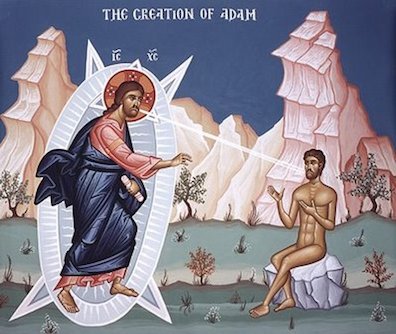
The first verse of Genesis says that "In the beginning God
created the heavens and the earth." It does not say whether
God created these things from some pre-existing
material, but by the second century of the Christian era
theologians were arguing that their God brought the world into
being from nothing, as opposed to Gnostic accounts of a
demiurge who fashioned it from primordial matter. A verse of 2
Maccabees (a 2nd-century book deemed canonical by the Catholic
church) says, "I beseech thee, my son, look upon the heaven
and the earth, and all that is therein, and consider that God
made them of things that were not, and so was mankind made
likewise" (7:28). Similarly, the older book of Wisdom (another
work deemed canonical by the Catholic church but considered
apocryphal by most Protestants) says that "We are born of
nothing" (2:2).
When applied to the human soul, this idea of "Creation
from nothing" seems to conflict with the statement in
Genesis that God "formed man of the dust of the ground" (2:7).
Later philosophers, however, authorized by the following words
of the same verse––"and breathed into his nostrils the breath
of life; and man became a living soul"—took pains to
distinguish between the fleshly part of human nature and an
immortal part called the rational soul which God makes in
special, additional acts of creation ex nihilo.
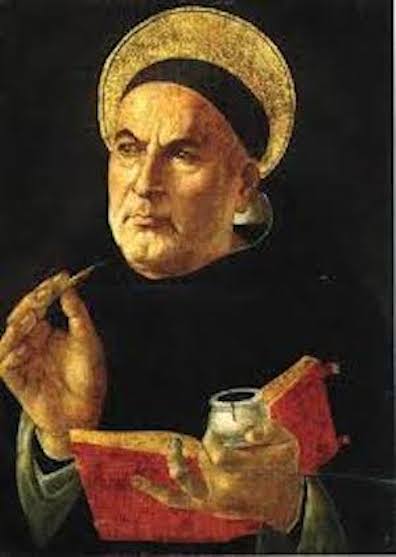
Stephen's beloved Thomas Aquinas argues that "The rational
soul can be made only by creation," meaning that it "cannot be
produced, save immediately by God" (Summa Theologica
1.90.2-3).
In canto 25 of Dante's Purgatorio, Statius gives a
materialistic account of the growth of the vegetative and the
animal souls in the human embryo, during the first few months
of gestation, followed by a description of how God
subsequently intervenes in the process to breathe a rational
soul into the embryo: "once the brain's articulation / in the
embryo arrives at its perfection, / the First Mover turns to
it, rejoicing / in such handiwork of nature, and breathes /
into it a spirit, new and full of power, / which then draws
into its substance / all it there finds active and becomes a
single soul / that lives, and feels, and reflects upon itself"
(68-75). The rational soul, which is immortal, subsumes into
itself the lesser forms of soul (plant and animal) that would
otherwise be perishable.
Armed with this traditional way of thinking, Stephen makes
sharp distinctions between the material part of his being and
a spiritual dimension that exists eternally. His father and
mother ("the man with my voice and my eyes and a ghostwoman
with ashes on her breath") produced him by an act of sexual
intercourse: they "clasped and sundered, did the coupler's will." In this
sexual sense, Stephen was "made not begotten"—unlike
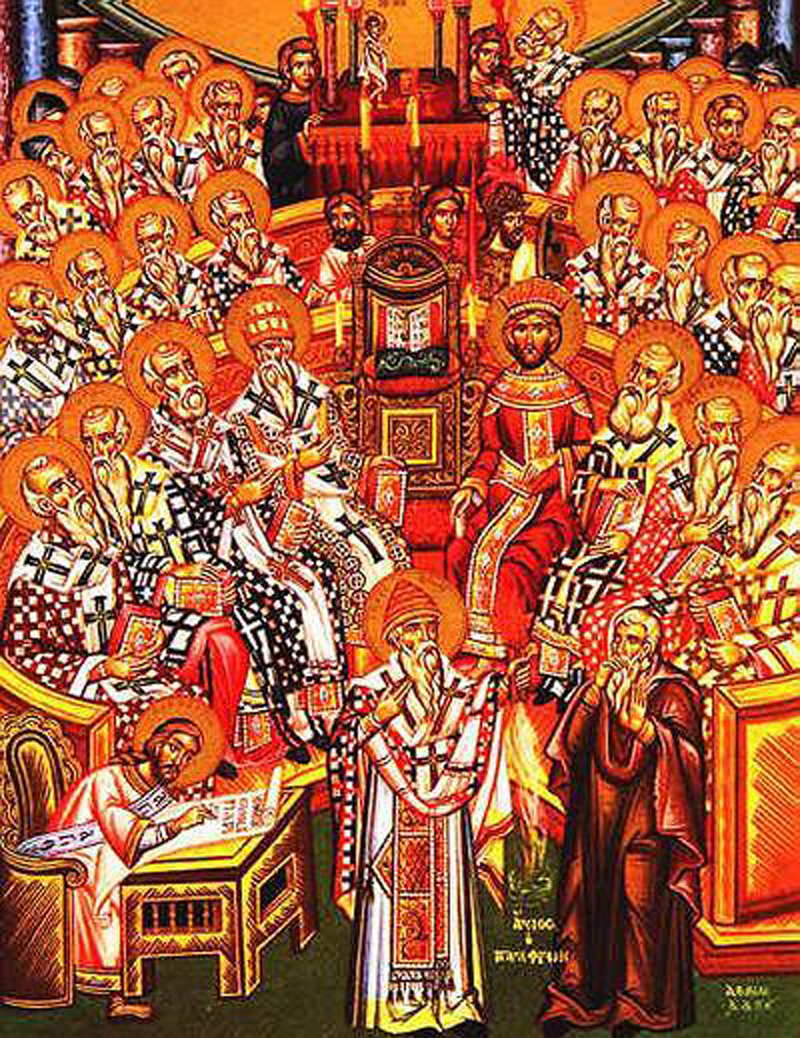
the divine Christ, who according to the Nicene Creed was "begotten, but
not made, of one essence consubstantial with the Father."
(Begetting, as used in the Creed, is a theological term
describing the mysterious, and only metaphorically sexual,
relationship between two persons, Father and Son, who are consubstantial
but distinct.)
After thinking of himself as "made not begotten," however,
Stephen turns to the spiritual account: "From before
the ages He willed me and now may not will me away or ever.
A lex eterna stays about Him."
Gifford traces the "eternal law" to Summa Theologica
1.91.1: "The ruling idea of things which exists in God as the
effective sovereign of them all has the nature of law. Then
since God's mind does not conceive in time, but has an eternal
concept...it follows that this law should be called eternal."
Thomas takes up the tricky question of how human souls which
do not yet exist could be thought of as somehow existing
eternally in the mind of God. (His answer, a devious triumph
of scholastic logic, is that God has eternal foreknowledge of
the people who will eventually be born.) He does not take up
the logically similar question of whether God might choose to
return eternally preordained souls to nonexistence.
Stephen's soul, then—combining the logic of this passage with
what Aquinas says about the creation of the rational soul one
question earlier in the Summa—did not come into
actual existence until the moment it was infused into his
gestating pre-rational body, but its existence has been willed
outside of time and thus exists in God for all eternity. And,
since God's thinking "has the nature of law," it might be
said–, though here Stephen is flirting with heresy, as one of
his teachers accuses him of doing in A Portrait of the
Artist, that God is not able to will him out of
existence. He is not only immortal, but guaranteed to remain
so. He revises this opinion in Eumaeus, just as he
corrects his heretical statement in A Portrait.